


New Animal Carcass Management System to Improve Sanitary Biocontainment from Livestock Farms to Rendering Facilities
Currently, the swine sector depends on the growth and evolution of farms taking place safely, guaranteeing the survival of populations. Thus, it is essential to have production systems that, in addition to being sustainable and efficient, are biosecure for both animals and consumers.
These production systems include the preservation and collection of carcasses from farms, as it can represent a link in the transfer of potentially contaminated effluents and the circulation of new diseases between farms, due to:
- Bad practices in the use of containers used for carcass preservation.
- Incorrect placement of carcasses inside the container, leading to spills of liquids and other bodily effluents from decomposition.
- Loading above the container’s maximum capacity, amplifying splashing phenomena and the formation of bioaerosols.
- Delays in requesting collection, which implies an advanced state of decomposition and the leaching of bodily effluents.
All these aspects reduce the biocontainment capacity of the current carcass preservation and collection system, increasing the risk of pathogen spread. Furthermore, the state of decomposition of the carcasses affects the performance and productivity of the transformation processes carried out at the company’s facilities. Likewise, the quality of the incoming material—that is, the condition of the tissues and the presence of biological agents—influences the quality of the final products extracted (animal fat and protein).
In view of the limitations presented by the current system, the project proposes the development of a new system for the preservation and collection of animal remains, which is more effective from the standpoint of contaminant biocontainment (pathogenic microorganisms and effluents from cadaveric decomposition) and carcass preservation (tissue integrity).
The proposed new system consists of a refrigerated isothermal chamber into which a large-capacity, fully airtight metallic container is introduced for the prolonged and low-temperature preservation of carcasses. The design of the new system includes continuous monitoring of the temperature inside the chamber as well as the container’s load, along with automated management to guarantee the biocontainment of potential pathogens and any type of bodily effluents.
1. Objectives
The main objective of the Operational Group is to develop a new automated and monitored system for the preservation and collection of dead animals as a means to increase the biocontainment of contaminants while maintaining the histological integrity of tissues.
Likewise, it seeks to foster the resilience of the agricultural sector in order to improve long-term food security, agricultural diversity, and the economic sustainability of agricultural production throughout the territory.
To achieve the general objective, the following specific objectives have been established:
- Characterize the conventional carcass preservation and collection system by monitoring and recording a series of process data.
- Define the mechatronic design of the new carcass preservation and collection system based on the characterization of the conventional system.
- Assess the efficacy and efficiency of the new system regarding contaminant biocontainment and carcass preservation.
- Evaluate the technical and economic feasibility of the new system by comparing its efficacy and efficiency with the conventional system.
- Perform the transfer of the project’s results.
2. Description of the actions carried out in the project
The project included everything from the design and development of the new animal carcass preservation and collection system to the performance of pilot tests.
All the actions proposed in the project were focused on validating the functioning and effectiveness of the system in terms of biocontainment and animal tissue preservation.
Action 1: Initial characterization and monitoring of the conventional system
The purpose of this first activity was to gather a series of data related to the conventional preservation and collection system to properly size the prototypes and subsequently compare the improvements achieved with the new system.
To this end, a collection route was established that included different types of pig farms with varied population sizes, and data such as mortality rate, collection frequency, number of collected carcasses, their weight, and decomposition status were recorded.
Action 2: Development of a prototype system for carcass preservation and collection
Based on the information collected about the conventional preservation and collection system, the structural and mechanical design of a prototype system for the temporary storage of carcasses was carried out.
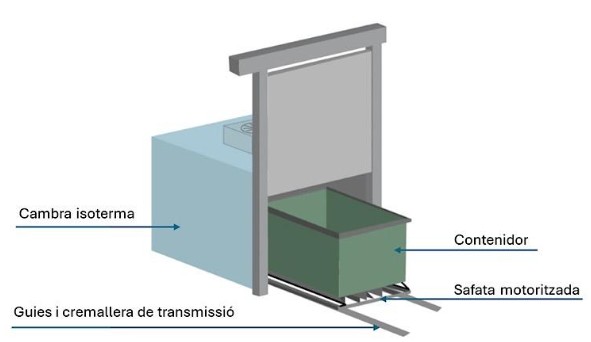
Figure 1. Mechanical design of the proposed prototype system. (Prepared by: SUBCARN ECHEVARRÍA)
With the designed prototype system, the goal was to minimize temperature loss during each opening and loading of the animal container, in order to maintain the integrity of their tissues for the longest possible period of time.
Action 3: Validation of the new carcass preservation and collection system
In parallel with the design of the carcass preservation prototype, the adaptation and modification of a collection truck was carried out so that it could unload the container of the developed prototype and transport the carcasses to the rendering plant. Once both the prototype and the truck adaptation were completed, pilot tests were conducted in real pig farm environments.
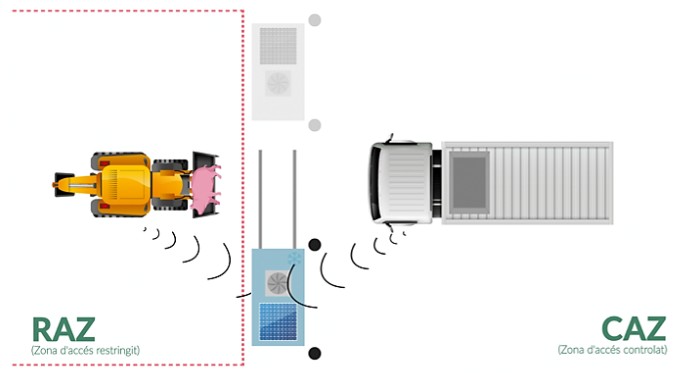
Figure 2. Schematic representation of the access zones. RAZ: restricted access zone for the farmer (boundary of the clean/dirty zone of the farm); CAZ: controlled access zone for the maneuvering of the collection truck. (Prepared by: SUBCARN ECHEVARRÍA)
During the pilot tests, the new system was compared with the conventional system regarding its capacity to preserve the animals, through a macroscopic and histological study of the carcasses.
On the other hand, the efficiency of each system in terms of pathogen biocontainment was also evaluated. For each of the evaluated systems, systematic surface sampling was carried out using sponges, and four molecular pathogen targets were analyzed: European PRRSV, North American PRRSV, PCV2, and PCV3.
Action 4: Technical and economic feasibility analysis of the new system
Based on the analytical results obtained during the pilot tests, a statistical analysis was performed to identify potential differences between the conventional system and the new carcass preservation and collection system.
3. Final results and conclusions
The set of tests carried out showed a significantly superior preservation with the new system, both at a macroscopic and microscopic level, compared to the conventional system. Specifically, fewer signs of decomposition were observed, particularly in key indicators such as liquid accumulation, tissue emphysema, and the presence of insects, a fact attributable to a better physical barrier and the creation of less favorable conditions for the development of necrophagous fauna.
At a microscopic level, the new system showed less tissue alteration, as well as a significant reduction in bacterial proliferation and cellular degenerative processes.
On the other hand, the modifications to the collection truck and the design of the new system allowed for operational improvements that reduced the handling and opening time of the containers, as well as improving the cleaning and disinfection conditions of the containers. These actions reinforced the physical containment of the system and reduced the risk of mechanical transmission between farms.
Finally, the new preservation and collection system allowed for an increase in the preservation time of the carcasses and enhanced the quality of the treated by-products, reducing electricity and water consumption at the rendering plant, as well as decreasing CO₂ emissions associated with carcass transport.
As a main conclusion, it has been shown that the new system features a greater capacity to preserve the integrity of carcasses and delay the appearance of visible post-mortem changes, as well as to reduce the load of bacterial alterations.
This final aspect is particularly relevant not only from a sanitary and logistical perspective but also from a productive standpoint, since preserving tissue morphology favors greater subsequent utilization of the carcasses within the framework of the circular economy, and allows for higher quality final products (fats and meals) obtained after treatment in rendering facilities.
Leader of the operational group
SUBPRODUCTOS CÁRNICOS ECHEVARRÍA Y ASOCIADOS, SL
Web: https://subcarnechevarria.com/
Other members of the operational group (aid recipients)
CAL CIRERA DE PINÒS, SL
Web: –
RAMADERA MARBA, SL
Web: –
Other members of the operational group (non-aid recipients)
Name: URBAN REFUSE DEVELOPMENT, S.L.
Web: https://urd-awc.com/en
Name: UNIVERSITAT DE LLEIDA – DEPARTAMENT DE CIÈNCIA ANIMAL
Web: https://www.udl.cat/ca/
Name: ASOCIACIÓN NACIONAL DE INDUSTRIAS TRANSFORMADORAS DE GRASAS Y SUBPRODUCTOS ANIMALES (ANAGRASA)
Web: https://www.anagrasa.org/
Name: UNIÓ DE PAGESOS DE CATALUNYA (UP)
Web: https://uniopagesos.cat/
Name: ASSOCIACIÓ CATALANA DE PRODUCTORS PORCÍ (PORCAT)
Web: https://www.porcat.org/ca
Coordinator of the operational group
SUBPRODUCTOS CÁRNICOS ECHEVARRÍA Y ASOCIADOS, SL
Web: https://subcarnechevarria.com/
Technological center of the operational group
Name: UNIVERSITAT DE LLEIDA – DEPARTAMENT DE CIÈNCIA ANIMAL
Web: https://www.udl.cat/ca/
Territorial scope of application
Province/s: Lleida
County/ies (Comarca/s): Segrià and Solsonès
Thematic scope/s of application
| ☐ | Agricultural production system | ☐ | Forestry |
| ☒ | Agricultural practice | ☐ | Water management |
| ☒ | Agricultural equipment and machinery | ☐ | Climate and climate change |
| ☒ | Livestock and animal welfare | ☐ | Energy management |
| ☐ | Plant production and horticulture | ☒ | Waste and by-product management |
| ☐ | Landscape / Land management | ☐ | Biodiversity and natural environment management |
| ☐ | Pest and disease control | ☐ | Food quality / processing and nutrition |
| ☐ | Fertilization and nutrient management | ☐ | Supply chain, marketing, and consumption |
| ☐ | Soil management | ☒ | Agricultural and forestry competitiveness and diversification |
| ☐ | Genetic resources |
Project contribution to EU Strategies
| ☒ | Achieve climate neutrality |
| ☐ | Decrease the overall use and risk of chemical pesticides |
| ☐ | Foster organic farming and/or organic aquaculture |
| ☒ | Reduce the use of antimicrobials in farm animals and aquaculture |
| ☐ | Reduce nutrient losses and fertilizer use while maintaining soil fertility |
| ☐ | Improve the management of natural resources used in agriculture, such as water, soil, and air |
| ☐ | Protect and/or restore biodiversity and ecosystem services in agricultural and forestry systems |
| ☐ | Restore agricultural area consisting of high-diversity landscape elements |
| ☐ | Facilitate access to fast broadband internet in rural areas |
| ☒ | Improve animal welfare |
| ☐ | Foster biodiversity-friendly afforestation and reforestation |
Other project information
Total project budget: €307,700.13
DARPA funding: €142,296.79
EU funding: €107,346.71
Own funding: €58,056.63
2023 Call
Project start: 2024
Current status: Ongoing
Action of the Strategic Plan of the CAP 2023-2027 co-financed by:

