

New system for managing animal carcasses to improve sanitary biocontainment, from livestock farms to rendering
Action under the Strategic Plan of the CAP 2023–2027 co-financed by:

OPERATIONAL GROUPS PROJECT – CALL 2023
PROJECT TITLE: NEW SYSTEM FOR MANAGING ANIMAL CARCASSES TO IMPROVE SANITARY BIOCONTAINMENT, FROM LIVESTOCK FARMS TO RENDERING
SUMMARY
Currently, the pig farming sector depends on safe growth and development of farms, ensuring the survival of populations. Therefore, it is essential to have production systems that, besides being sustainable and efficient, are biosecure—for both animals and consumers.
These production systems include the storage and collection of carcasses on farms, as this can serve as a point of transfer for potentially contaminated effluents and the spread of new diseases between farms, due to:
- Poor practices in the use of containers for storing carcasses.
- Incorrect placement of carcasses inside the container, causing leakage of liquids and other decomposition-related effluents.
- Overloading of the container beyond its capacity, amplifying splashing and bioaerosol formation.
- Delays in collection notification, leading to advanced decomposition and leachate of bodily fluids.
All these aspects reduce the biocontainment capacity of the current carcass collection and preservation system, increasing the risk of pathogen spread. Furthermore, the state of decomposition of carcasses affects the performance and productivity of transformation processes at the company’s facilities. The quality of the input material—i.e., the condition of the tissues and presence of biological agents—also influences the quality of the final products (fat and animal protein).
Given the limitations of the current system, the project proposes the development of a new carcass preservation and collection system that is more effective in terms of biocontainment of contaminants (pathogenic microorganisms and effluents from cadaveric decomposition) and preservation of carcass tissue integrity.
The proposed new system consists of a refrigerated isothermal chamber containing a large-capacity, fully sealed galvanized steel container for extended low-temperature storage of carcasses. The design includes continuous temperature monitoring inside the chamber and container load tracking, along with automated handling to ensure biocontainment of pathogens and bodily effluents.
1- OBJECTIVES
The main goal of the Operational Group is the development of a new automated and monitored system for the storage and collection of dead animals to increase contaminant biocontainment, while maintaining the histological integrity of the tissues.
Additionally, the aim is to enhance the resilience of the agricultural sector to improve long-term food security, agricultural diversity, and the economic sustainability of farming across the territory.

Photo 1. Animal carcass collection and transport vehicle. (Photo: SUBCARN ECHEVARRÍA)
To achieve the general objective, the following specific goals have been set:
• Characterize the conventional carcass preservation and collection system through process data monitoring and recording.
• Define the mechatronic design of the new system based on this characterization.
• Evaluate the effectiveness and efficiency of the new system in biocontainment and carcass preservation.
• Assess the technical and economic feasibility of the new system compared to the conventional one.
• Disseminate the project results.
2- DESCRIPTION OF THE PLANNED PROJECT ACTIONS
The project includes everything from the design and development of the new carcass preservation and collection system to pilot testing.
All proposed actions aim to validate the system’s functionality and effectiveness in terms of biocontainment and tissue preservation.
Action 1: Initial characterization and monitoring of the conventional system
This first activity aims to gather data on the currently implemented system to size prototypes and later compare improvements achieved with the new system. A collection route will be set, covering various pig farms with different population sizes, collecting data such as mortality rates, collection frequency, number of carcasses, their weight, and decomposition status.
Action 2: Development of a prototype system for carcass preservation and collection
Based on information from the current system, the structural and mechanical design of a prototype for temporary carcass storage will be established and optimized.
The design will aim to minimize temperature loss during container opening and loading to maintain tissue integrity for as long as possible.
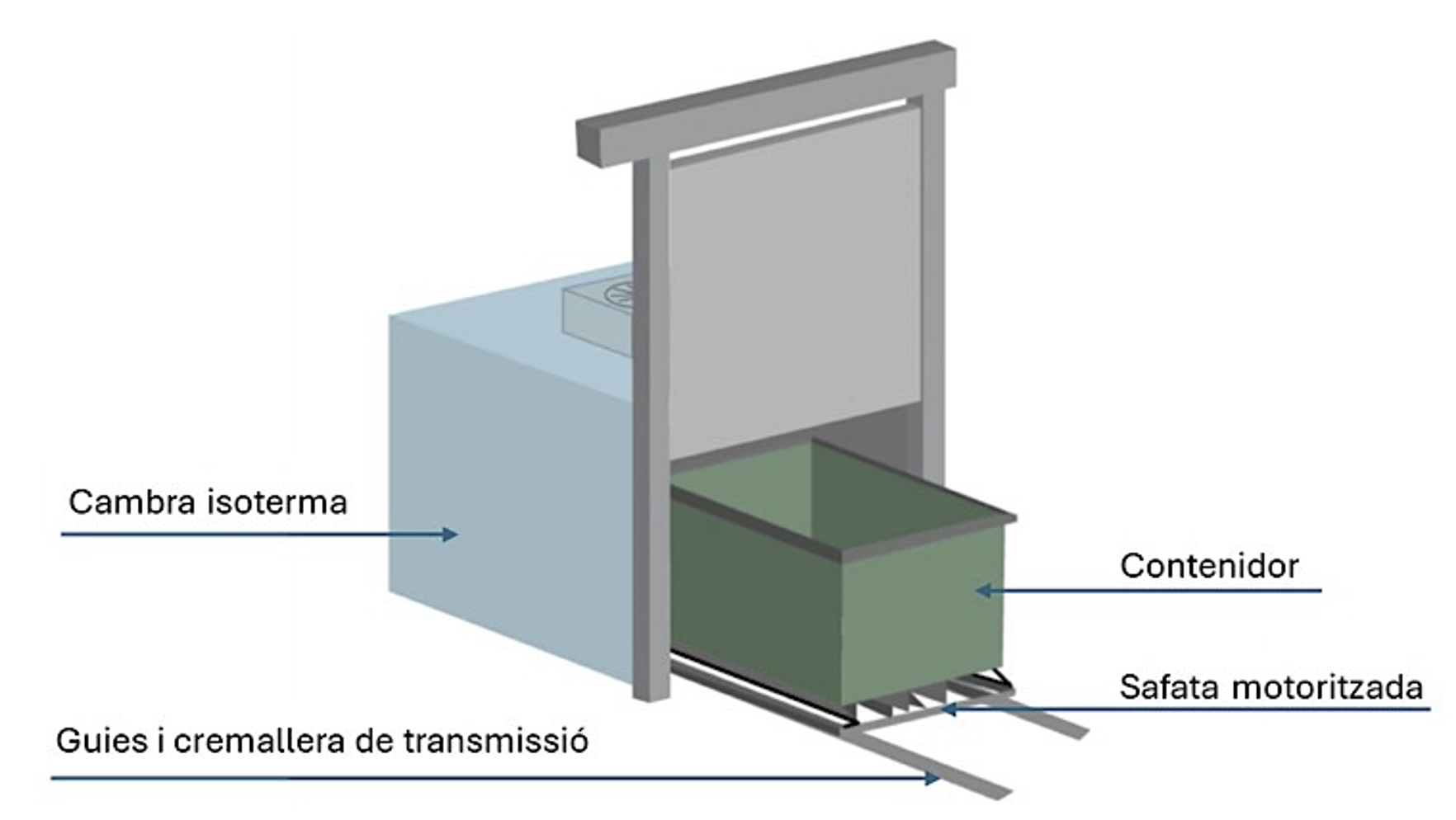
Figure 1. Mechanical design of the proposed prototype system. (Source: SUBCARN ECHEVARRÍA)
Action 3: Validation of the new carcass preservation and collection system
This will evaluate, on one hand, the effectiveness of the new system in biocontaining contaminants and, on the other, its efficiency in carcass preservation.
Pilot tests will be conducted on two pig farms, comparing the current and new systems. To ensure representativeness, designated access and operation zones will be established for farmers and collection truck operators.

Figure 2. Schematic representation of access zones. RAZ: restricted to farmer (clean/dirty zone boundary); CAZ: controlled access zone for truck operator. (Source: SUBCARN ECHEVARRÍA)
Validation will include pathogen detection analysis, macroscopic evaluation of the carcasses, and histological study of the tissues.
Finally, to complete the pilot tests, a collection truck adapted to the new system design will be used.
Action 4: Analysis of the new system’s technical and economic feasibility
Once analytical results are available, a statistical study will assess potential differences in biocontainment and carcass viability.
Additionally, an economic feasibility study will be conducted based on cost-benefit analysis of implementing and using the new system, with short- and medium-term estimates.
3- EXPECTED RESULTS AND PRACTICAL RECOMMENDATIONS
The project aims to offer a sustainable and highly efficient alternative to conventional animal carcass preservation and collection systems.
The objective is to achieve an optimal design for: (1) prolonged maintenance of tissue characteristics, ensuring higher-quality fat and protein extraction yields; and (2) prevention of contaminant effluent production and release into the environment, ensuring better biocontainment and reducing the risk of pathogen transmission between livestock farms.
The project is also expected to reduce carcass collection frequency and increase process traceability and reliability through real-time monitoring and automated, single-operator functionality.
Operational Group Leader
SUBPRODUCTOS CÁRNICOS ECHEVARRÍA Y ASOCIADOS, SL
Website: https://subcarnechevarria.com/
Other group members (aid recipients)
CAL CIRERA DE PINÒS, SL
Website: –
RAMADERA MARBA, SL
Website: –
Other group members (non-aid recipients)
Name: URBAN REFUSE DEVELOPMENT, S.L.
Website: https://urd-awc.com/en
Name: UNIVERSITAT DE LLEIDA – DEPARTMENT OF ANIMAL SCIENCE
Website: https://www.udl.cat/ca/
Name: NATIONAL ASSOCIATION OF INDUSTRIES TRANSFORMING FATS AND ANIMAL BY-PRODUCTS (ANAGRASA)
Website: https://www.anagrasa.org/
Name: UNIÓ DE PAGESOS DE CATALUNYA (UP)
Website: https://uniopagesos.cat/
Name: CATALAN ASSOCIATION OF PIG PRODUCERS (PORCAT)
Website: https://www.porcat.org/ca
Operational Group Coordinator
SUBPRODUCTOS CÁRNICOS ECHEVARRÍA Y ASOCIADOS, SL
Website: https://subcarnechevarria.com/
Operational Group Technology Centre
Name: UNIVERSITAT DE LLEIDA – DEPARTMENT OF ANIMAL SCIENCE
Website: https://www.udl.cat/ca/
Territorial scope of application
Province(s): Lleida
Region(s): Segrià and Solsonès
Action under the Strategic Plan of the CAP 2023–2027 co-financed by:
